Heading 3
Block quote
Heading 4
Heading 1
Heading 2
Heading 5
Heading 6
Lorem ipsum dolor sit amet, consectetur adipiscing elit, sed do eiusmod tempor incididunt ut labore et dolore magna aliqua. Ut enim ad minim veniam, quis nostrud exercitation ullamco laboris nisi ut aliquip ex ea commodo consequat. Duis aute irure dolor in reprehenderit in voluptate velit esse cillum dolore eu fugiat nulla pariatur.
Ordered list
- Item 1
- Item 2
- Item 3
Unordered list
Text link
Bold text
Emphasis
Superscript
Subscript
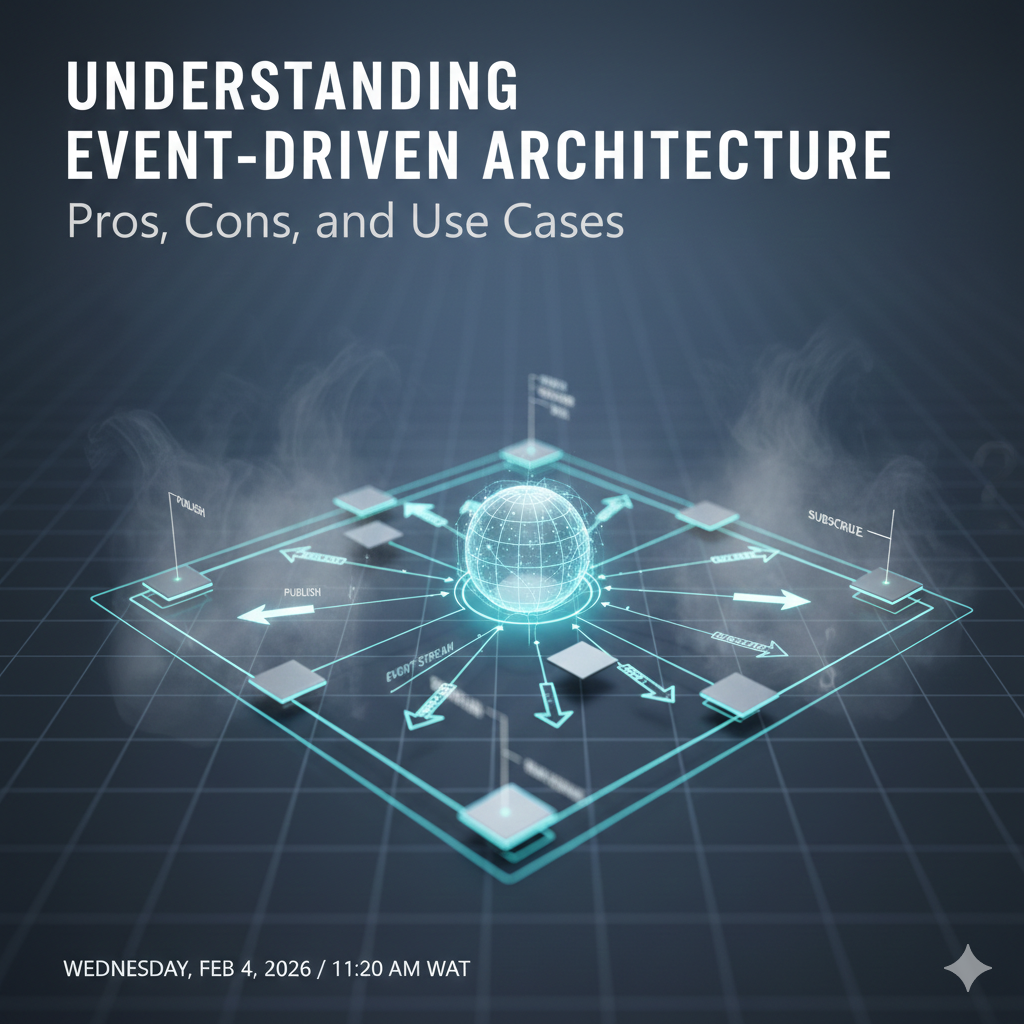
Event-Driven Architecture (EDA) is a design paradigm where system components communicate by producing and consuming events. It’s increasingly popular for building responsive, scalable, and decoupled systems.
What is Event-Driven Architecture?
In EDA, events represent significant changes or actions in the system. Components listen for these events and react accordingly, enabling asynchronous and loosely coupled communication.
Pros of Event-Driven Architecture
- Scalability: Systems can handle high volumes of events and scale components independently.
- Flexibility: Decouples components, making it easier to add or modify features without impacting the whole system.
- Responsiveness: Enables near real-time processing and quick reaction to events.
- Resilience: Failure in one component doesn’t necessarily affect others, improving fault tolerance.
Cons of Event-Driven Architecture
- Complexity: Can introduce complexity in understanding and debugging event flows.
- Event Ordering: Managing the order of events and consistency can be challenging.
- Testing Difficulty: Testing asynchronous and distributed components requires extra effort.
- Overhead: Infrastructure for event handling (message brokers, queues) adds operational overhead.
Common Use Cases
- Real-time Analytics: Processing streams of data for instant insights.
- IoT Systems: Handling numerous events from distributed devices.
- Microservices Communication: Enabling loosely coupled services to interact.
- User Activity Tracking: Capturing user actions for personalization or monitoring.
Conclusion
Event-Driven Architecture offers powerful benefits for building modern, scalable systems but requires careful design and tooling to manage its complexities. It’s a strong fit when responsiveness and flexibility are priorities.